Official language: Spanish
Capital: Madrid
Currency: Euro
Population as % of total EU: 9.14
Joined EU: 1986
Did you know?
- The Spanish national anthem, the Marcha Real, is one of only four in the world without lyrics.
- There are two autonomous Spanish cities on the northern shore of Morocco’s Mediterranean coastline, Ceuta and Melilla. That makes Spain the only country in the EU to have land border with an African country.
- The Spanish version of the tooth fairy may be slightly unpalatable to some – it’s a mouse that goes by the name of Ratoncito Pérez. Perez is, in fact, part of the mythology of many Spanish-speaking countries, and even featured in a Colgate marketing campaign in Venezuela.
- Spain is home to the oldest operating lighthouse in the world, the Tower of Hercules. The lighthouse is located in A Coruña in Galicia, has existed since at least the second century AD and is now a UNESCO World Heritage site.
- Spain is the biggest producer of olive oil in the world.
Visiting Barcelona: casting my mind back to 2010
It’s been an absolute age since I visited Spain. It was back in 2010: I was just about 20, away from university for the summer holidays and meeting up with someone I barely knew.
My destination? Barcelona. Picked by my travel companion and not somewhere I knew anything about, I have a vague recollection of buying a plane ticket and a city guide at the last minute, before booking a hostel in a quiet, leafy suburb of the city and jetting off.
Aided by some low-quality holiday snaps rediscovered in the annals of Facebook, I’ve taken a patchy but pleasant trip down memory lane to compile this blog post…
Antoni Gaudí
The thing I remember most about my time in Barcelona is marvelling at the distinctive buildings designed by modernist Catalan architect Antoni Gaudí. And there’s a lot of them: Gaudí spent the majority of his life in Barcelona and the city boasts the largest concentration of his works in the world.
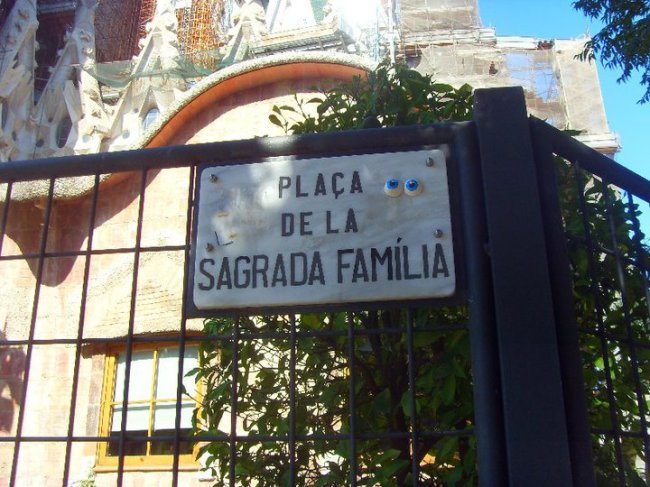
The most famous and perhaps the most striking is the Sagrada Familia. Construction of the church began in 1882 and it’s still unfinished, though recent estimates suggest that it might be completed in 2026. But don’t let this put you off visiting, and do brave the queues and entrance fee to get inside – the way the light plays on the interior is truly stunning.
Other buildings to watch out for include Casa Battló and Casa Milà (also known as La Pedrera, the quarry). Both can be visited, but there is a charge.

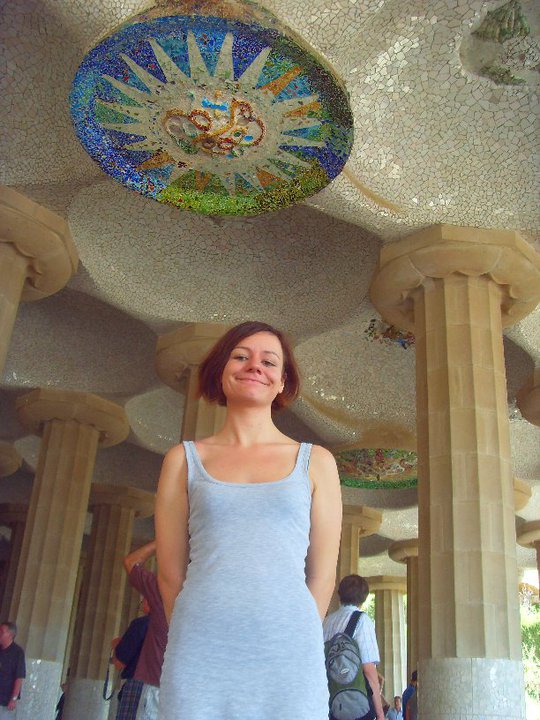
Also worth a visit, especially on a sunny day, is Park Güell in the north-east of the city. Designed by Gaudí and originally intended for Barcelona’s aristocracy, it has some beautiful mosaic work, a number of buildings and a main terrace overlooking the city.
Joan Miró
From one famous Spanish artist to another: this time, the Surrealist painter, sculptor, and ceramicist Joan Miró. Miró was born in Barcelona in 1893 and in 1975 a museum dedicated to his work, the Fundació Joan Miró, opened in Montjuïc.

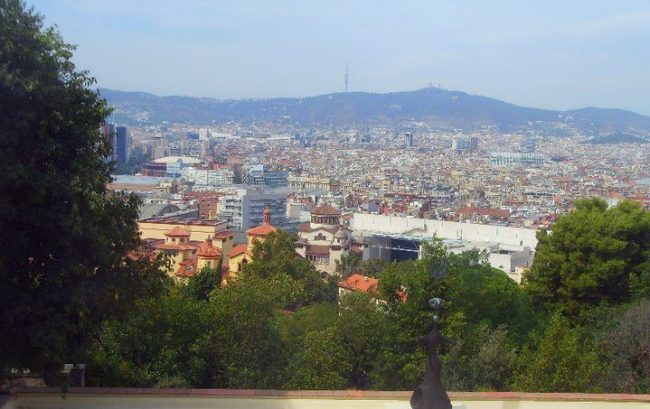
The museum is well worth a visit and, like Park Güell, has a rather lovely view over the city from its terrace. Its edge over the park, in this sense, is that it’s bound to be a lot less busy. You can also reach the museum by a funicular or a cable car – and who doesn’t love those?!
Parc de la Ciutadella
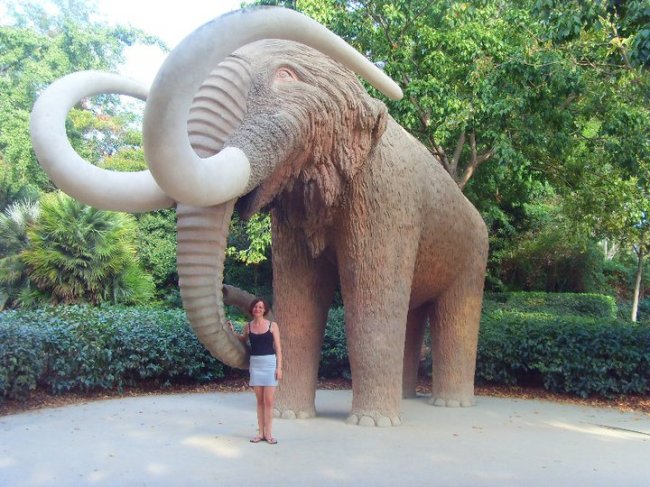
Ciutadella Park is pretty massive, measuring in at about 70 acres. Amongst other things, it is home to the city zoo, the Catalan Parliament building, a castle, a tropical greenhouse, the Geological Museum and a boating lake. There’s also a rather giant statue of a mammoth.
La Barceloneta
La Barceloneta is the city’s seaside neighbourhood, home to Sant Sebastià Beach. It’s also at the other end of the cable car that goes up to Montjuïc.

If you’re the kind of person that likes sun, sand and a good book, it’s a great novelty to visit a bustling city that also has a beach on its doorstep.
Overcrowding?
I’ve been told by people that have visited Barcelona more recently that mass tourism has become a real problem (something that has also been reported on in the UK press). This is pretty sad, and makes my memories of Barcelona – which don’t feature anything of the sort – a tiny bit bittersweet. This is something to bear in mind if you’re planning a trip there, and also a reminder to be as responsible (and un-touristy) a visitor as possible. Various initiatives to bring the residents “back” to Barcelona are being implemented, and I can only hope they’re successful.
 All Around EU