Official language: Slovak
Capital: Bratislava
Currency: Euro
Population as % of total EU: 1.06
Joined EU: 2004
Did you know?
- Slovakia’s capital city, Bratislava, is the only capital in the world that borders two countries (Austria and Hungary). Bratislava and Vienna are actually the closest neighbouring capitals of Europe (if you discount Rome and the Vatican), being a mere six miles apart.
- Slovakia was formed following the dissolution of Czechoslovakia on 1 January 1993. Czechoslovakia split into two independent nations, Czechia and Slovakia – the split was peaceful and is commonly referred to as the “Velvet Divorce”, a reference to the non-violent 1989 Velvet Revolution that led to the end of one-party rule in Czechoslovakia.
- Andy Warhol’s parents came from Medzilaborce, a town in current-day north-eastern Slovakia, which was part of Austria-Hungary when they were there. His surname is, in fact, actually Warhola. As a result of this heritage, the town is now home to the world’s second-largest collection of Warhol’s artwork (beaten only by his native Pittsburgh).
- Slovakia is one of the few places in Europe where opal is mined. Opals from the country have an illustrious past – the ‘Trojan Fire’ opal was famously worn by Empress Josephine, wife of Napoleon. Today tourists can walk or even scuba dive through opal mineshafts.
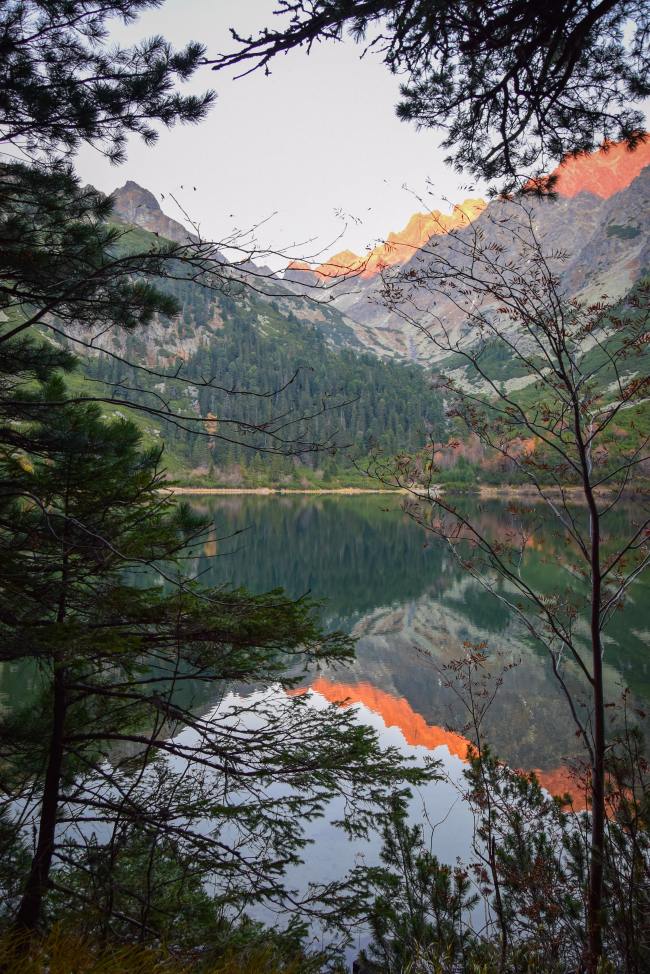
- The majority of Slovakia – around 80 percent – is more than 800 metres above sea level. This means that it has many different mountain ranges to explore, including the highest of the Carpathian Range, the High Tatras Mountains.
Looking back and dreaming ahead (again)
As noted in my semi-recent Hungary blog post, in my late teens I embarked on a solo Interrailing tour of Europe. The trip was driven by a desire to see more of my home continent, but I also had a vague goal to build my self-confidence by thrusting myself into new places and situations. Slovakia was one of the final countries I visited on that trip and, much like Hungary, it helped me achieve that goal by being the backdrop for a series of mini disasters that have subsequently eclipsed almost all other memories of those sections of my trip.
In Slovakia’s case, I spent a few wet days in Bratislava. Being an inexperienced and poorly prepared traveller at that point – and having spent the bulk of my trip soaking up summer sunshine – I had not packed suitable clothes or footwear for the deluge that welcomed me to the city. The caricature of a Brit caught abroad without an umbrella was an irony not lost on others in my hostel (“but it always rains in your country!”), and perhaps it was the gentle teasing that pushed me to pretend all was fine and venture out to find a budget supermarket dinner in my flip-flops…
I did find a supermarket – probably the largest Tesco I’ve ever seen in my life. In my excitement running towards it, I managed to slip, get a flip-flop caught in a tram rail and go flying. Upon scrambling back onto my feet and to safety, I noticed that the somewhat sharp rail had actually taken a small sliver of my big toe clean off. Cue much panic, a crazed trip to a laundrette (one of the few places I passed) to see if they had any bandages and ending the evening with a surprisingly attentive hostel receptionist thoroughly washing and dressing my wound. The days following that evening were better, and my toe-damaging escapades gave me a silly story with which to regale fellow travellers during the holiday’s final days. And I know that I did manage to do some sightseeing, and even took in a dodgy club on a boat.
But, really, all this is a very lengthy way of saying – once again – that I’m not really equipped to write an interesting travel blog about my time in Slovakia. So I’ve indulged in some armchair tourism instead, collecting inspiration for a future trip, done properly this time. Below are some highlights, which I’ll be dreaming about until we can travel freely again.
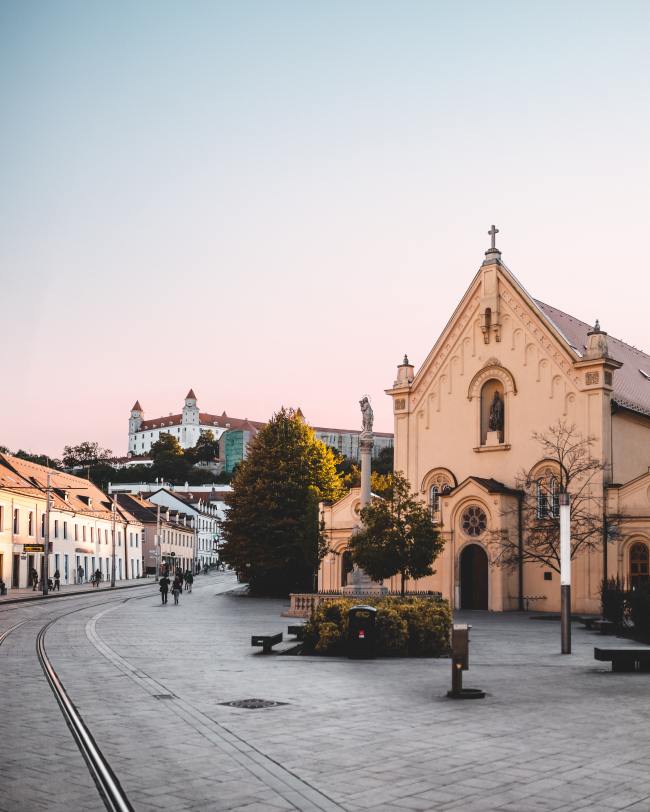
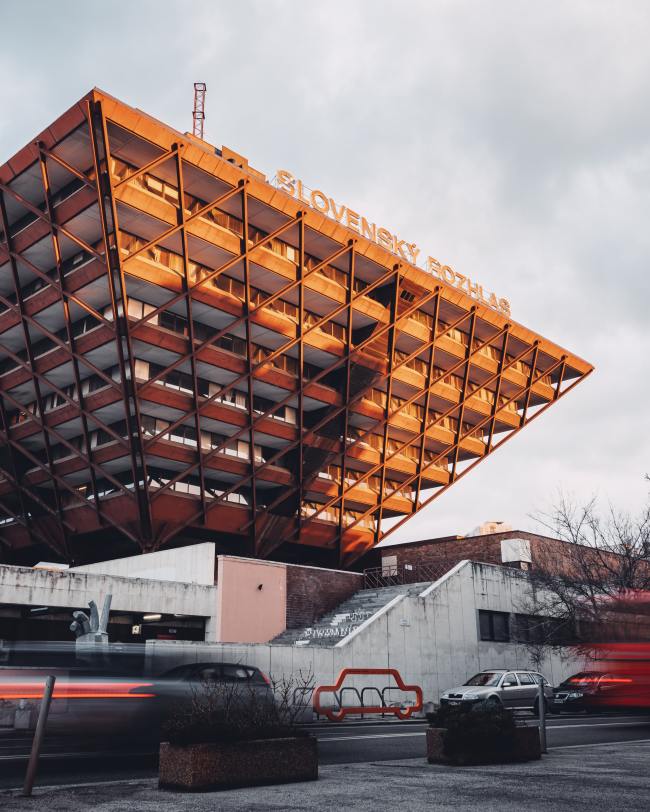
- Bratislava: aside from properly taking in its Old Town, get to know the city’s quirky statues and Soviet architecture. Also check out the Bratislava Forest Park, on the edge of the city, which has hiking trails, a cable car and even a mini bobsleigh run. Atop a hill in the park, you can visit the Kamzík TV Tower, which has a viewing deck and a panoramic restaurant.
- Cave exploration: visit the Domica Cave on Slovakia’s south-western border. The cave, one of thousands in the country, is part of a 25-kilometre system that goes into neighbouring Hungary and, when the water level is high enough, you can sail on the underground Styx river (ignoring the connotations of the name) over the border into the Baradla Cave. Some of Slovakia’s caves are even UNESCO World Heritage sites, including the Dobinska Ice Cave and the Ochtinská Aragonite Cave.
- Wine and beer: visit one of Slovakia’s wine regions. The largest is the 40-kilometre Small Carpathian region, which is surrounded by some spectacular scenery. The ideal time to visit is February, when many vineyards open their cellar doors to the public. Beer is also a big thing in Slovakia, and can be drunk much cheaper than in many other places in Europe. This blog post about the country’s microbreweries definitely piqued my interest.
- Bachledova Valley treetop walk: close to the High Tatras mountains, stroll on a boardwalk close to the top of a forest canopy and learn about the region’s native flora and fauna.
- Historic haunts: visit some of Slovakia’s historic villages, towns and cities, many of which you can see captured in beautiful photography on this Hand Luggage Only blogpost. There is also Čičmany, a village with only a few hundred inhabitants, striking for its traditional wooden houses painted with eye-catching geometrical patterns.
I read a good many articles and blogs to plan my dream trip to Slovakia, but my absolute favourite was this one by Hana Melegova. Her website is also a treasure trove of travel tips, for Slovakia and further afield.
Is there anything else you would recommend? Please do send me a message if you have any suggestions.
 All Around EU