Official language: Romanian
Capital: Bucharest
Currency: Romanian Leu
Population as % of total EU: 3.9
Joined EU: 2007
Did you know?
- Romanian is the only widely spoken Romance language in Eastern Europe.
- The name of Romania’s currency, leu, means ‘lion’. It is sometimes referred to as the ‘new leu’, as in 2005 it was revalued with four zeroes being dropped: 20,000 lei became 2 lei, and so on. One leu is equivalent to 100 bani (which also means ‘money’) – and the 10 bani note that was in circulation in 1917 holds the record for being the smallest paper money ever printed (27.5 mm x 38 mm).
- In 1858 Bucharest became the first city in the world to be lit by oil lamps; in 1884, Timisoara, a city in western Romania, became the first mainland European city to be illuminated by electric street lamps. And Peles Castle, in the mountain resort of Sinaia, was the first castle in the world to be fully powered by locally produced electricity.
- Dictator Nicolae Ceaușescu ruled Romania from 1965 until his execution on Christmas Day in 1989. His reign was brutal and oppressive and one of his key goals was to boost Romania’s population in order to increase the workforce. In order to do this he banned both contraception and abortions, and women of child-bearing age were forced to undergo regular gynaecological exams. As a result, one of the [many] troubling legacies of the Ceaușescu era was orphanages filled with unwanted and neglected children, and the repercussions of this policy are still being felt today. More information about the policy and its modern-day repercussions is available here and here.
- Bucharest’s Palace of the Parliament (Palatul Parlamentului, also known as the ‘People’s House’) is the heaviest building in the world at a whopping 4,098,500,000 kilograms. Built by Ceaușescu, it is connected to a series of underground tunnels that were supposedly meant to allow him to escape if the Romanian people revolted. They were never used for this purpose, but they were driven through for a Top Gear episode in 2010.
Visiting Romania: in pursuit of relaxation
To give us some inspiration, my travel companion for my trip to Romania got us a copy of the country’s Rough Guide. Somewhat alarmingly, in the book’s opening pages it says this:
“Travel in Romania is as rewarding as it is challenging … Try to accept whatever happens as an adventure – encounters with Gypsies, wild bears and tricky officials are likely to be far more interesting than anything touted by the tourist board.”
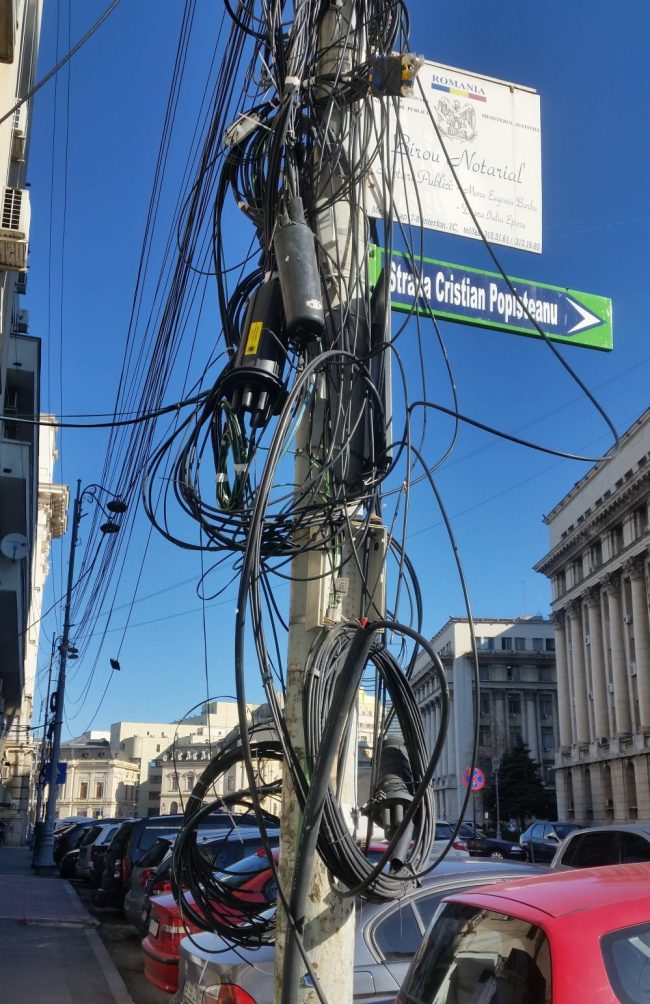
The fact that a mainstream travel guide opens with a pinch of negativity is a tiny bit alarming. It induced visions of holiday disaster: pickpockets, getting lost, being conned out of all our travel funds, burglars plundering our Airbnb rental.
Of course, none of this happened. In fact, my overwhelming sensation when looking back on the trip is one of relaxation. I don’t begrudge the Rough Guide its words though – had we not had such a sense of foreboding, we might not have adopted such a laid-back approach to our time there. And had we not done that, who knows? All I can say is – I see where you’re coming from, Rough Guide (sort of).
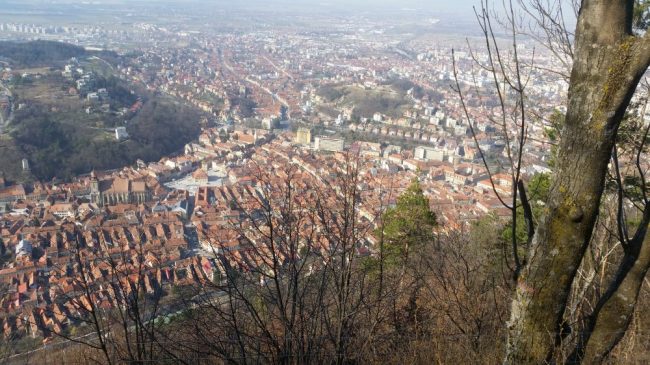
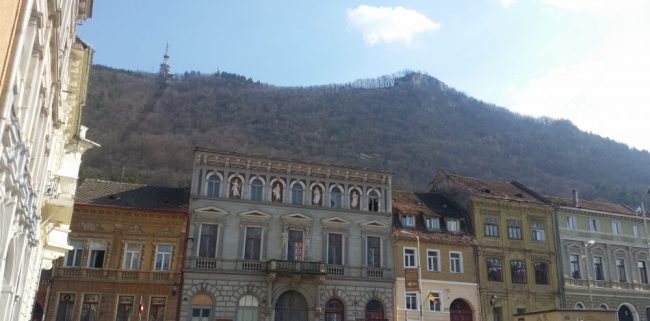
Though flying into Bucharest, we’d planned to go straight onto Brașov (Transylvania). I would highly recommend this approach for a short break – Bucharest is sprawling, chaotic and loud. It’s charming, but it’s not relaxing; Brașov, on the other hand, has a delightful Old Town that we happily spent several lazy days enjoying (note: we briefly sampled Bucharest’s Old Town, and concluded that its appeal didn’t stretch beyond nightlife).
Disclaimer: we were also treated to some glorious sunshine for the majority of our trip. It may have helped us forget about the daily grind back home just a little…
So, how to relax from Bucharest to Brașov?
Take public transport with a pinch of salt: some tips
When travelling, it’s easy to get stressed about navigating local transport systems or missing connections. And this is especially true in Romania: very little guidance is given in English, Google Maps is poor at advising on public transport options and timetables are more of a target than a rule.
But try not to plan things to a rigid schedule, and you’ll be fine. We found each of our connections in the end, but it took a bit of detective work. Ask people for help (via hand gestures, sometimes) and use the GPS on your phone. Read copious travel forums online. And just because there’s no queue at the lone ticket machine in the station – when there’s an hour’s long queue for all the staffed ticket booths – it doesn’t mean the machine doesn’t work.
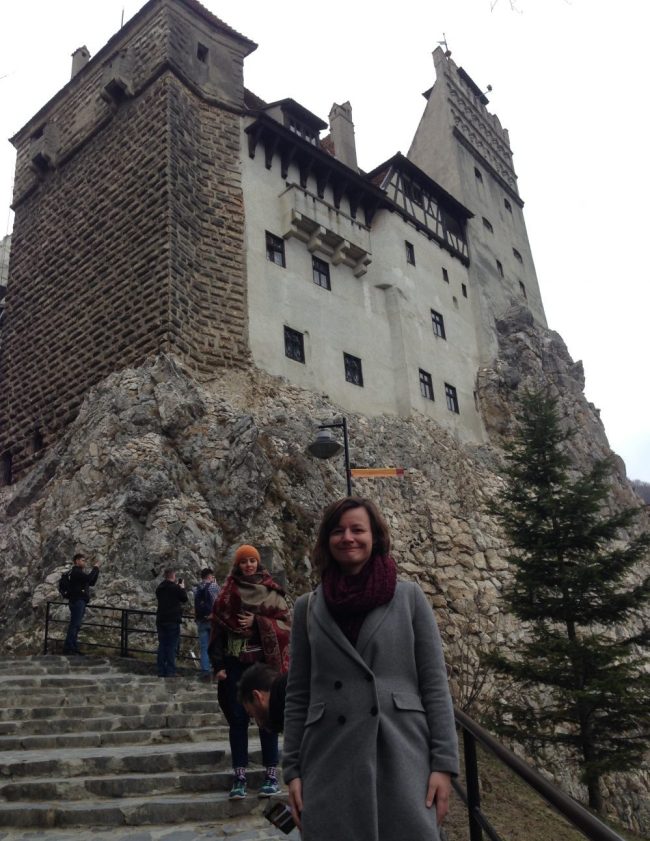
Taxis and Ubers are ridiculously cheap compared to their equivalents in the UK. If you’re heading to Bran Castle from Brașov, for example, a taxi will take half the time of the bus (as the bus station is far from the city centre) and will cost only £16 (total) for 45 minutes’ driving time.
To get from Brașov to Bucharest’s airport, book a seat in a minibus transfer. It’s much more reliable then taking a train / bus combination, and avoids the crazy traffic of Bucharest proper.
The spa
Just out of Bucharest, slightly past the airport (and on the way to Brașov) is a haven of tranquillity: Therme Bucuresti. The spa has 3,000 square metres of heated pools, jacuzzis, 3 aromatherapy pools and a smattering of saunas. It is also home to the largest palm tree forest in Europe: loll around surrounded by 500 specimens, which took 700 days to acclimatise to their new home. There’s an outdoor pool and deck area as well.
I have a weak spot for spas, but this one was pretty damn good. And it cost peanuts compared to what a similar thing would set you back in the UK (the equivalent on £20, including towel, locker rental and a drink).
Practical info: there’s a free shuttle bus that goes to Therme from central Bucharest (Piata Romana and Piata Victoriei).
Food and drink
If you know me personally or have read the other entries on this blog, you’ll know that for me a good trip includes visiting lots of local food and drink establishments. I’ll admit being a vegetarian in Romania was a challenge – but we definitely found some good spots and dishes in Brașov:
- La Ceaun (the one on Piata Sfatlui): this place specialises in soups, but we fell in love with their traditional dips and appetisers. The stars are the mashed bean (like houmous but better), a cold, garlicky aubergine salad (that might be called potlagel) and the pickled tomato. The atmosphere is friendly; we toasted our final night in town with some Italian meteorologists the next table over. Verdict: the Țuică (prune schnapps) is deadly.
- Opus 9: this bar sits on a quiet little square, and all its furniture is made of cardboard. Yep, cardboard.
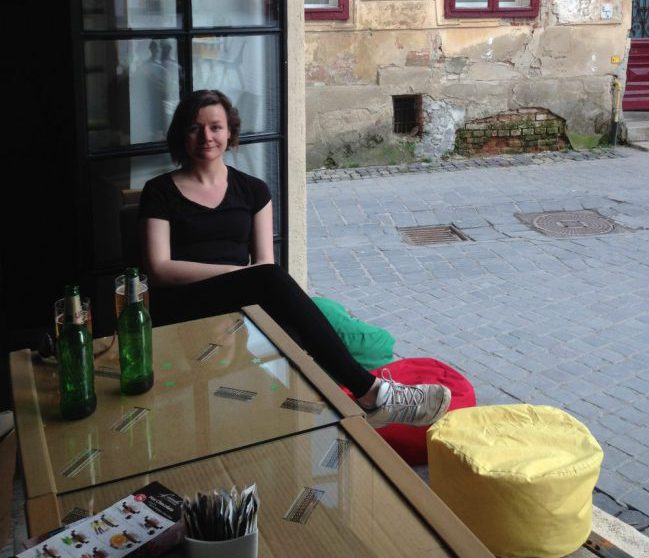
- Festival 39: a cocktail bar decked out to make you feel like you’re in 1930s Paris (it does food, too). The décor is pretty spectacular – from porcelain figures emerging through the walls holding candles to ancient typewriters, this place is a feast for the eyes. The cocktail list is pages long, but they’ll only set you back about £3.50 apiece.
- L’etage: a small bar above a shop, whose motif is books, books and more books (they cover almost every wall). The place sports live music and relaxed vibes (plus pizza if you get peckish). Aperol spritz for £3.
- Pilvax: Hungarian cuisine in portions so bounteous I would have assumed I’d accidentally ordered a sharing plate if the menu hadn’t explicitly stated my appetiser was for one. Lots of meat, but also a dedicated vegetarian menu. And if you’re uncultured enough to just ask for “red wine” they don’t laugh at you – just pour you a sample of each they have on offer. My kinda place.
- Bistro de l’arte: the place to go for breakfast. We were tempted by their fruit selection, but there were copious unhealthy options too.
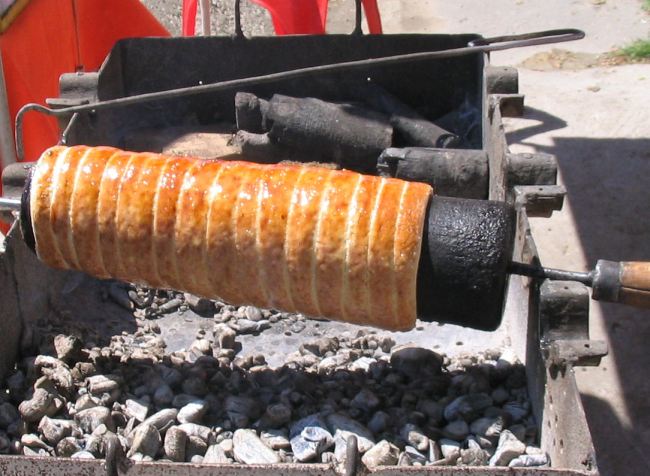
Another delicacy you can buy from lots of street stalls and bakeries is kürtőskalács. It’s a pastry I had never seen before, made from sweet dough. The dough is wrapped around a cone–shaped baking spit and roasted over charcoal while basted with melted butter, and then sprinkled with goodies like hazelnuts. Delicious.
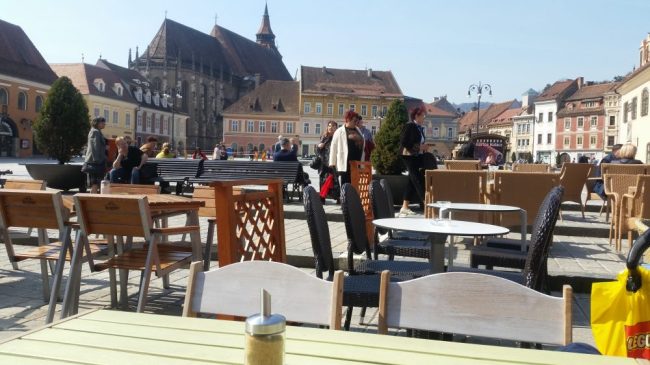
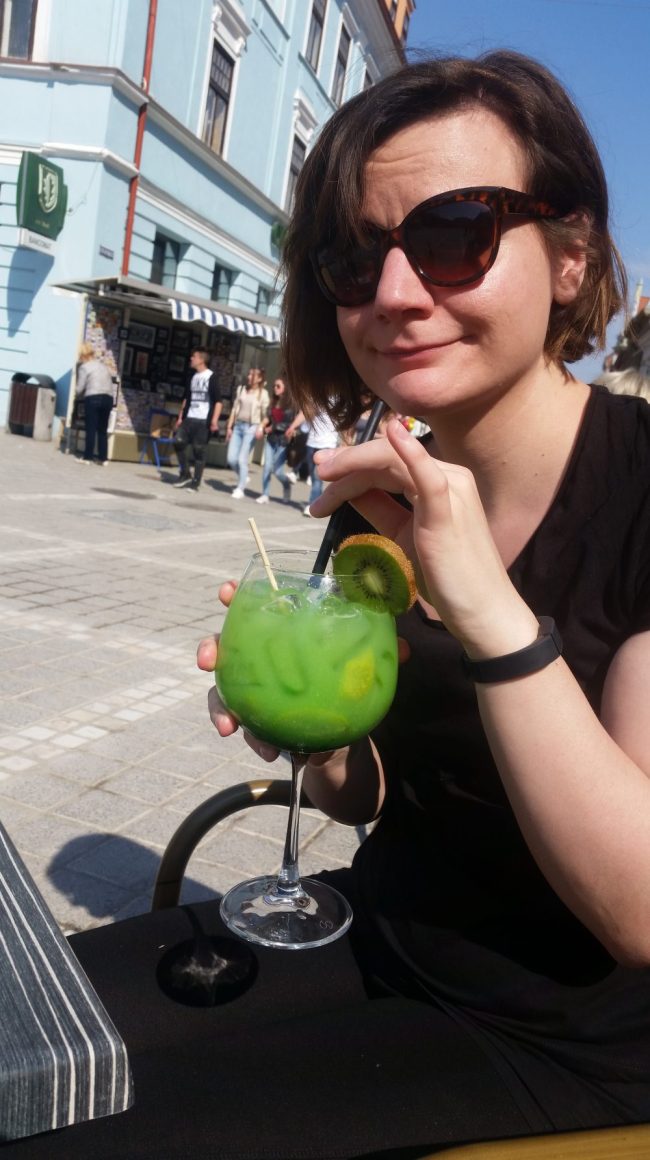
The Old Town’s main square is surrounded by lots of other good establishments – with normal prices, locals, cute stray cats and a fantastic view of the Black Church. Go on, you know you want to…
 All Around EU