Official languages: Irish, English
Capital: Dublin
Currency: Euro
Population as % of total EU: 0.9
Joined EU: 1973
Did you know?
- Bram Stoker, best known for writing vampire tale Dracula, was born in Dublin in 1847. Since the novel was first published in 1897, the eponymous vampire has featured in more than 1,000 books and more than 200 films. Although it is commonly thought that the character of Dracula was inspired by Transylvanian prince Vlad the Impaler, some historians think Irish history might have had more to do with it. Manus the Magnificent, who once ruled much of Ireland, is Stoker’s direct ancestor and is thought to have been behind some of his ideas.
- Irish is reportedly the least widely spoken of the 26 official languages of the European Union. There are primarily Irish-speaking regions in the country called Gaeltacht, but usage even in these areas is thought to be worryingly low. The 2011 Census found that Irish was only the third most spoken language in the country (after English and Polish).
- Aside from in zoos and as pets, Ireland is a snake-free island. Although legend has it that this is due to St Patrick driving them all into the sea in the fifth century, the reason is actually far more complex and less pithily explained. You can read about it here. Ireland is also missing several other animals common across the rest of Europe, including moles, weasels and roe deer.
- The Hill of Uisneach, in County Westmeath, marked the traditional centre of Ireland. Although not Ireland’s real geographic centre, it is possible to see many of its counties (roughly two-thirds of the country), from the top. The hill is also associated with the medieval origins of the Beltane fire festival (1st May), which symbolises the beginning of summer.
- Ireland has won the Eurovision Song Contest seven times, more than any other nation.
Visiting Ireland: a weekend in Cork City
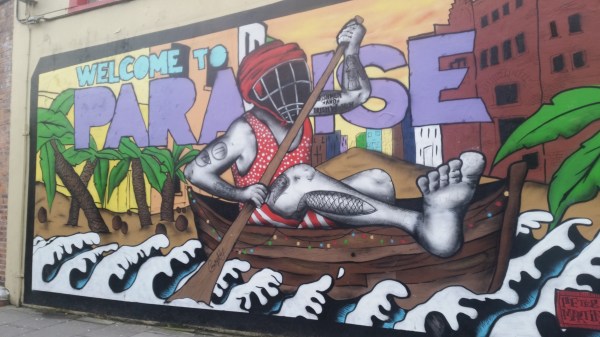
It sounds silly but, having grown up in a country so nearby and with a common language, I didn’t expect Ireland to feel ‘foreign’. I can’t speak for the country as a whole, but being in Cork definitely felt like being abroad. I did try to put my finger on exactly why, but ultimately the cause of the sensation stayed elusive and intangible. Architecture? Maybe. People? A bit. Climate? Hardly.
My expectations of Cork were shaped by two somewhat conflicting sources: general travel articles that characterised it as ‘Ireland’s second city’ and Lisa McInerney’s mesmerising novel The Glorious Heresies. It’s not a spoiler to say that the book doesn’t paint the most appealing picture of the city and I must confess that reading it before, throughout and after the trip may have coloured my perceptions somewhat. I felt as if there were secrets lurking around corners and behind dark doorways; the city felt brooding, full of life – and not necessarily receptive to tourism. Nonetheless, that’s what we were there for – and Cork rewards those who persevere.
Although the county of Cork is the largest in Ireland, Cork City feels relatively small. Its downtown area seems to consist of only a few main streets, and all the main tourist sites can be easily covered in a day or two, and on foot. It’s also home to some excellent food and drink establishments.
Butter Museum
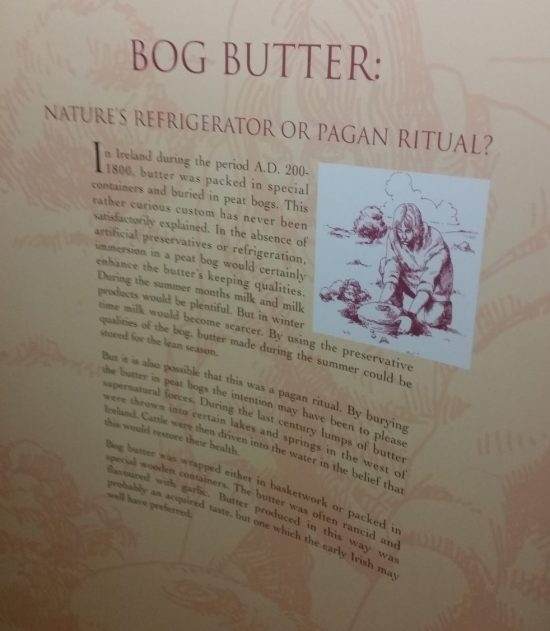
I find it near impossible to resist a niche museum, so there was no way I was visiting Cork without a visit to this little gem. In the late 18th century, Cork was the largest exporter of butter in the world, and the museum offers a potted history of the butter trade in Ireland, as well as its crossover with Irish folklore. It is very little, but surprisingly interesting – and worthwhile just to be able to hear a rendition of the little-known classic, Please Leave My Butter Alone…
Shandon Bells & Tower, St. Anne’s Church
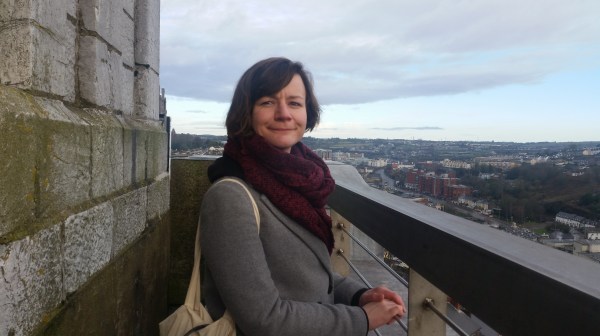
Around the corner from the Butter Museum you’ll find this 18th century church, perched on a hill overlooking the city. For a nominal fee, you can scale its 132 steps and get a panoramic view over Cork. The real treat, though, is the fact you can ring the church bells on the way up – there’s even a book of music so you can choose your tune. I plumped for Beethoven’s Ode to Joy – the EU’s anthem.
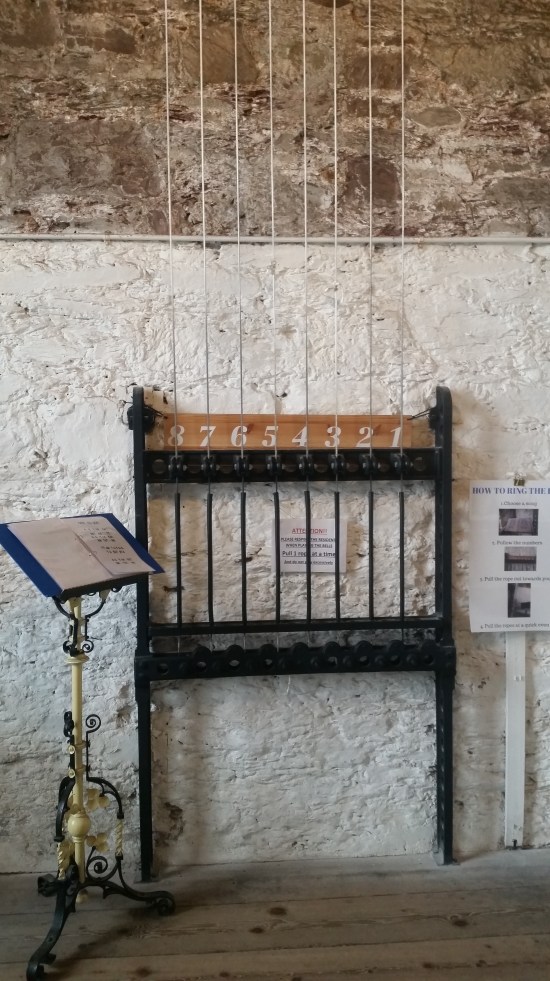
A warning though: you almost literally have to climb through the bells to get to the top of the tower.
Cork City Gaol
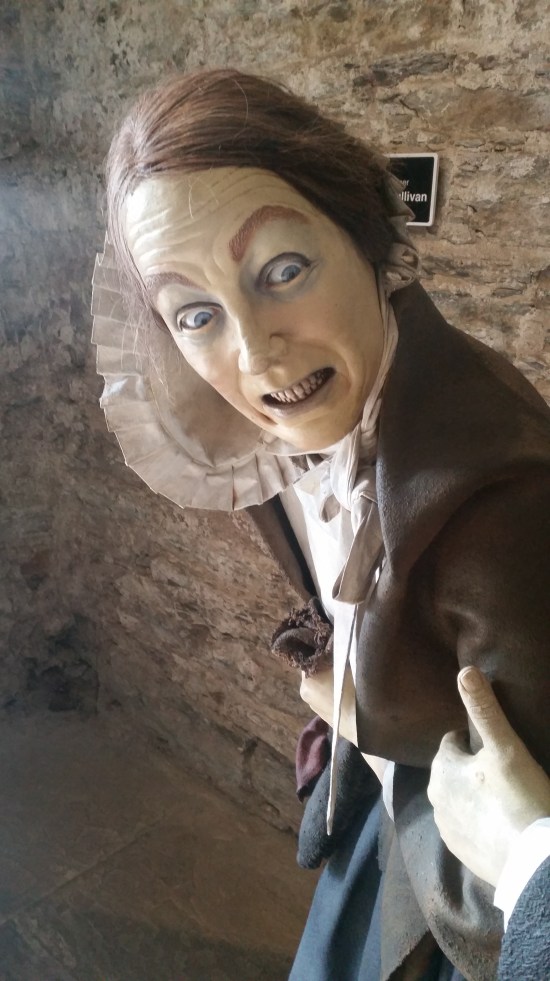
An uphill yet pleasant half an hour’s walk from the Butter Museum and Church, the Cork City Gaol Heritage Centre is an old prison from the 19th century. It’s an extremely well-presented insight into a piece of Cork’s history, set in surprisingly beautiful grounds.

Fitzgerald Park, University College Cork & the Glucksmann
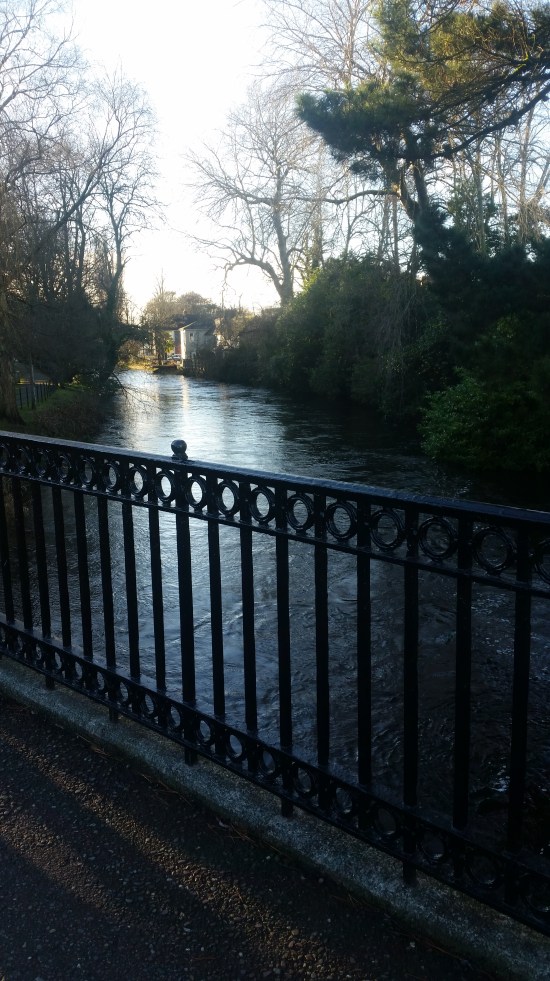
From the Gaol, you can meander your way back to the centre through Fitzgerald Park. There’s a café by the lake that serves hearty doorstop sandwiches, and it’s a lovely place to stop for a break, weather permitting.
From there, you can wind through the grounds of the university – there are some impressive buildings, and it’s something of a green oasis in the city.
The campus is also home to the Lewis Glucksman Gallery, which hosts free modern art exhibitions. It’s a bizarre-looking futuristic concrete and glass building, and the art we saw inside was no less unusual. A ten-minute video of Marina Abramović eating a whole raw onion will stay with me for a long time.
Mother Jones flea market
Mother Jones is a weekend-only flea market tucked into a road off McCurtain Street. Full of eclectic and vintage goodies, hours could be lost peering into its corners.


Food and drink
- Cork Coffee Roasters: a great way to kick-start your day, and the almond croissants are delicious.
- Café Paradiso: a vegetarian restaurant offering a delectable and almost overwhelming amount of choice. The peanut mousse and popcorn ice cream were heavenly.
- The Mutton Lane Inn: Dark, cavernous, cosy, candle-lit and dripping history. Excellent music seemed to be a staple and, despite the darkness, every time we visited there were a couple of lone souls reading books or papers in the corners – always a good sign.
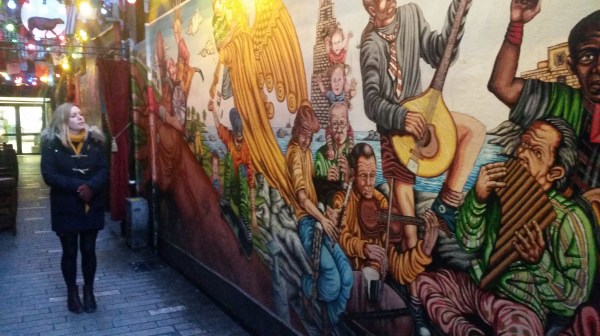
- The Oval: Another atmospheric heritage pub, this time with heavy curtains to compliment the candlelight. Rowdier than the above, and a place it seemed impossible to leave on a Saturday night (in a good way, of course).
- Sin É: Traditional Irish music, an unbelievably welcoming atmosphere (extending to dogs) and a bar decked out with numerous old postcards.
If we’d had more time, I would have loved to explore the area around Cork a little more, especially the coastline. I feel that there’s a lot more of Ireland to be discovered, and that for years I’ve sorely overlooked a wonderful destination practically on my doorstep. Thank you Ireland, and until next time!
 All Around EU