Official language: Croatian
Capital: Zagreb
Currency: Croatian Kuna
Population as % of total EU: 0.8
Joined EU: 2013
Did you know?
- In Croatian, the name of the country is Hrvatska, and the language is Hrvatski.
- The name of Croatia’s currency, kuna, translates as ‘marten’, the weasel-like mammal prevalent across Europe and North America. Martens’ furs were once used to pay taxes during Roman times in some parts of present-day Croatia, and the marten also appeared on medieval coins. One kuna is made up of 100 lipa, which is the Croatian name for the linden tree.
- Zagreb is home to The Museum of Broken Relationships, a museum dedicated entirely to showcasing the mementos of failed relationships. The museum opened in 2006 and is the brainchild of two Croatian artists (an ex-couple), film producer Olinka Vištica and sculptor Dražen Grubišić. It was so successful that a second museum opened in LA in 2016.
- Croatia has an extremely turbulent recent history. Broadly speaking, it was part of the Austro-Hungarian Empire until the end of World War I. In 1918, along with present-day Serbia and Slovenia, it formed part of the Kingdom of Yugoslavia. Following World War II, Yugoslavia became a federal independent Communist state, from which Croatia declared independence in 1991. From 1991 to 1995, the Croatian War of Independence was fought between Croat forces loyal to the government of Croatia and the Yugoslav People’s Army and local Serb forces.
- The official voting age in Croatia is 18; however, Croatian citizens can vote from the age of 16 if they are working full-time and paying taxes.
Visiting Croatia: summer memories
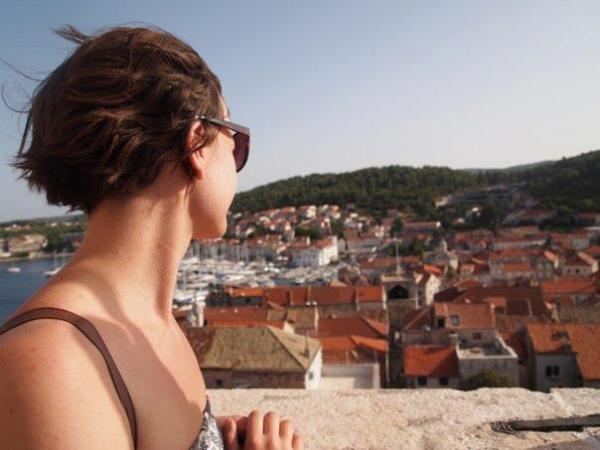
I travelled to Croatia just over four years ago. Way before this blog was even a twinkle in my eye, and back when the thought of the UK leaving the EU had never even crossed my mind. I was 22, had just finished university and wanted nothing more than sun, sea, wine – and copious breakfast pastries.
So you can expect few travel tips from this instalment; prepare yourself instead for a meandering reverie, with lots of grainy photos that probably mean a lot more to me than to you.
My arrival in Croatia is memorable for the simple fact that it is the only time I have ever arrived at an airport and been greeted by someone holding up a placard with my name on it. Like in the movies! My lovely friend Katie had already been in the country for a little while and had visited, amongst other things, the jealousy-inducing Plitvice Lakes.
Our meeting spot was Zadar: a city about mid-way down Croatia’s Dalmatian coast, famous for being described by Alfred Hitchcock as having “the world’s most beautiful” sunset. It’s also home to the rather quirky Sea Organ: a working organ operated entirely by the movement of the sea. It doesn’t look that special – just a series of steps leading into the water – but it’s actually made up of 35 pipes that play 7 chords of 5 tones depending on the tides.

We also went to a swanky bar, Garden Club, which can be found perched on the city’s ancient fortifying walls, and which is owned by UB40’s drummer. I would recommend it.
Our stay in Zadar was short but sweet, and was followed by a whistle-stop tour of Croatia’s beautiful coastline. Buses and boats are cheap and relatively easy to navigate with little (read: no) Croatian, and you’ll often be treated with stunning scenery along the way.

We visited Split, Dubrovnik and the tiny island of Korčula (only 279 square kilometres). My memory, though hazy and low on details, is entirely positive. Roaming Diocletian’s palace in Split is a must (and almost unavoidable), and it was there that we got truly stuck in to our breakfast pastry and evening red wine habit, which didn’t abate for the rest of the trip.


Then, I fell in love with Korčula. It’s small enough that you can see pretty much everything in one day and then relax by the sea for several, totally free from that niggling sensation that you should be doing some sort of sight-seeing. The water is blue, it’s baking hot in summer, and it’s nowhere near as touristy as some of the other islands. It also has a bar, Massimo, set on the turrets of the 15th century Zakerjan Tower in the island’s northern fortifications.
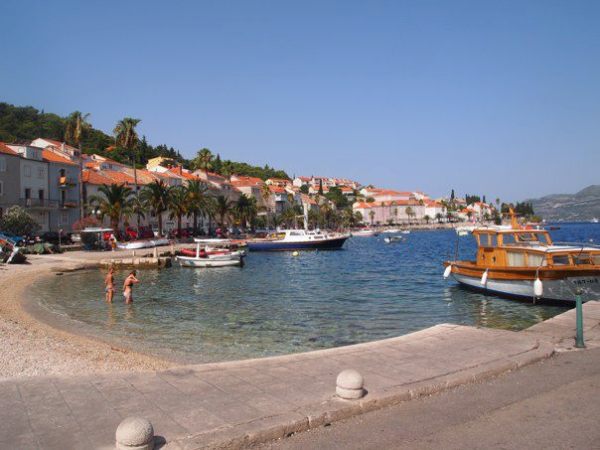

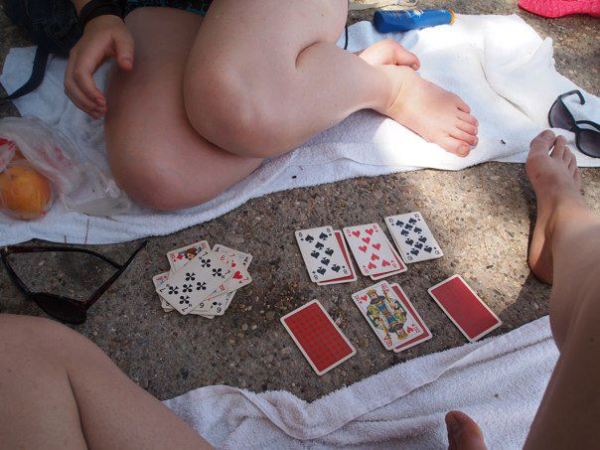


In Dubrovnik, rejuvenated by our island paradise, we were meant to meet two more friends. We had rented an apartment a little way out of the centre and near the coast, and had intended to spend the conclusion of the holiday in carefree relaxation. Alas, the pair missed their flight – and Katie and I had to skilfully negotiate being able to stay in the same apartment for half the price. Thus we ended on a somewhat haphazard – but ultimately hysterically enjoyable – couple of days.


One final tip for Dubrovnik – see if you can find out what’s on at Summer Cinema Slavica. We had the good luck to be in town when they were showing Wes Anderson’s wonderful Moonrise Kingdom. We watched it al fresco, in moonlight, surrounded by trees, with wine and with scarcely another audience member. Bliss.

 All Around EU