Official language: Bulgarian
Capital: Sofia
Currency: Bulgarian lev
Population as % of total EU: 1.36
Joined EU: 2007
Did you know?
- Traditionally, Orthodox Christian men in Bulgaria celebrate Epiphany (6 January) by chasing after crucifixes thrown into rivers by priests. It is believed that whoever gets the crucifix will be granted health and freedom from evil spirits for the coming year.
- Bulgaria has maintained its name longer than any other country in Europe and hasn’t changed its name since it was first established (681 AD).
- Bulgaria does bagpipes. In fact, the country holds the Guinness World Record for the largest bagpipe ensemble. 333 bagpipers achieved the feat in May 2012 at the Art of Living Foundation in Sofia’s National Palace of Culture.
- One of Bulgaria’s most famous exports is rose oil. It reportedly takes over 1,000 rose petals to make just one gram of the oil, which usually comes from the “Rose Valley”, a region to the south of the Balkan Mountains.
- In Bulgaria, shaking your head means “yes” and nodding means “no”.
Visiting Bulgaria: a last-minute dash to Plovdiv
With the clock ticking steadily down towards Brexit and two countries left to go, in late January I made a snap decision to hop on a plane and spend a few days in Plovdiv, Bulgaria’s second largest city. A friend had visited a while ago and had only good things to say, and I thought it might offer a slightly gentler pace than the capital. It had also held the title of European Capital of Culture in 2019, so it seemed a good time to visit.
First, a word of warning: the public transport connections from the airport are practically non-existent. You can either walk 30 minutes to the nearest train station, rent a car or get a taxi (about 30 Lev or £13). This is probably a reflection on how few flights use the airport – when I arrived, ours was the only plane there.
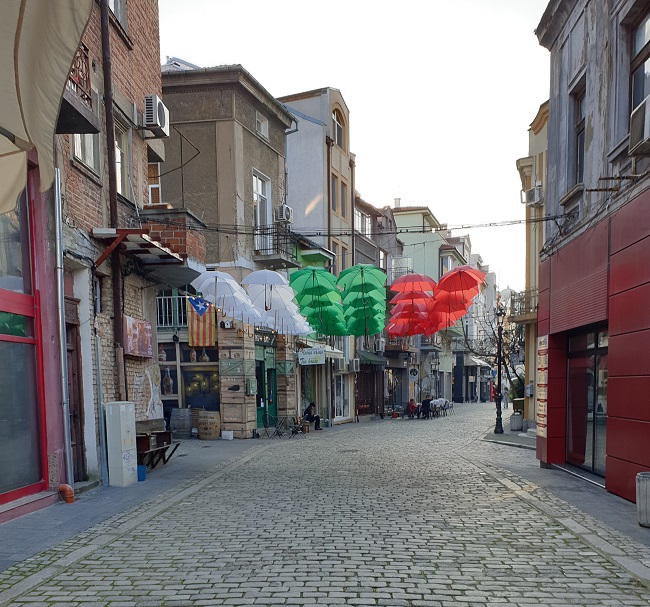
Thankfully, that’s where my public transport issues ended. Plovdiv has a compact centre with many pedestrianised areas and can be easily navigated on foot. It’s an ancient city and its centre oozes charm, with winding side streets, cobbles, street performers and tiny artisan shops.
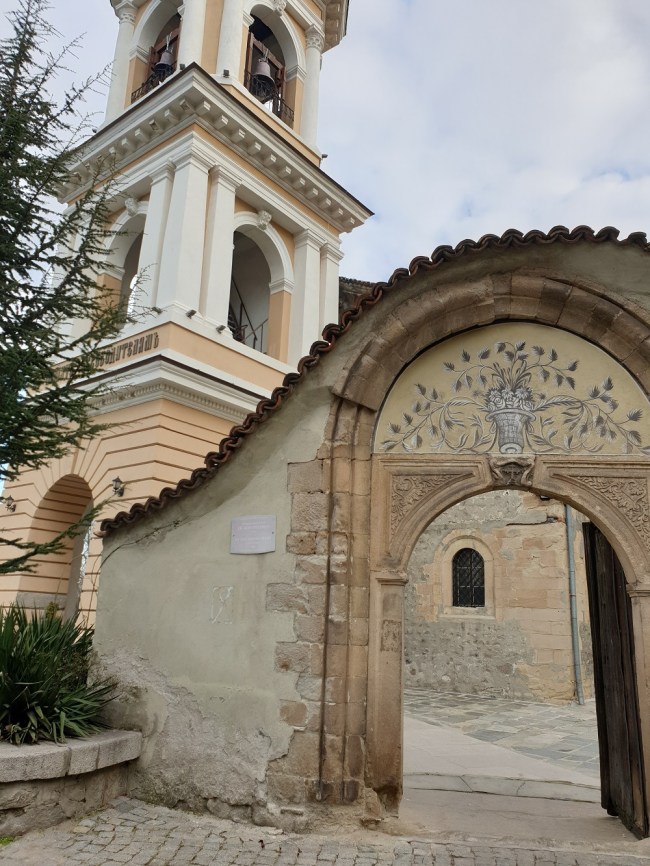
As usual, I’d recommend spending your first day wandering round and soaking up the atmosphere. I started in Kapana (Капана, “The Trap”), a hipster district filled with cafes and bars, made my way down the main shopping street (featuring assorted Roman ruins) and into the winding old town. Once you have your bearings, check out some of the recommendations below.
Hills
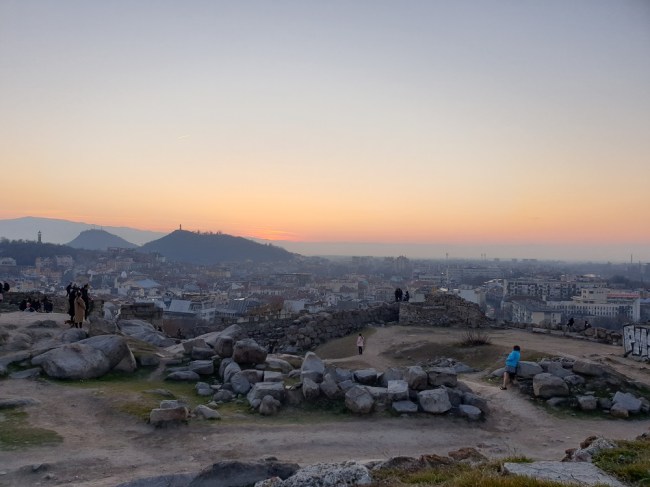
You may hear Plovdiv referred to as the “City of the Seven Hills” but don’t be fooled – there are actually only six of them! I tackled two – Nebet Tepe in the Old Town and Bunarzhik (The Liberators Hill) on the outskirts of the city centre.
The former has the (very sparse) remains of a prehistoric settlement at its peak and is reached via an easy, quick walk through the Old Town. On a clear day, it has good views to the mountains encircling the city (and to the other hills) and gives you an idea of Plovdiv’s urban sprawl. I headed up at sunset armed with a bottle of Bulgarian beer and it did not disappoint.
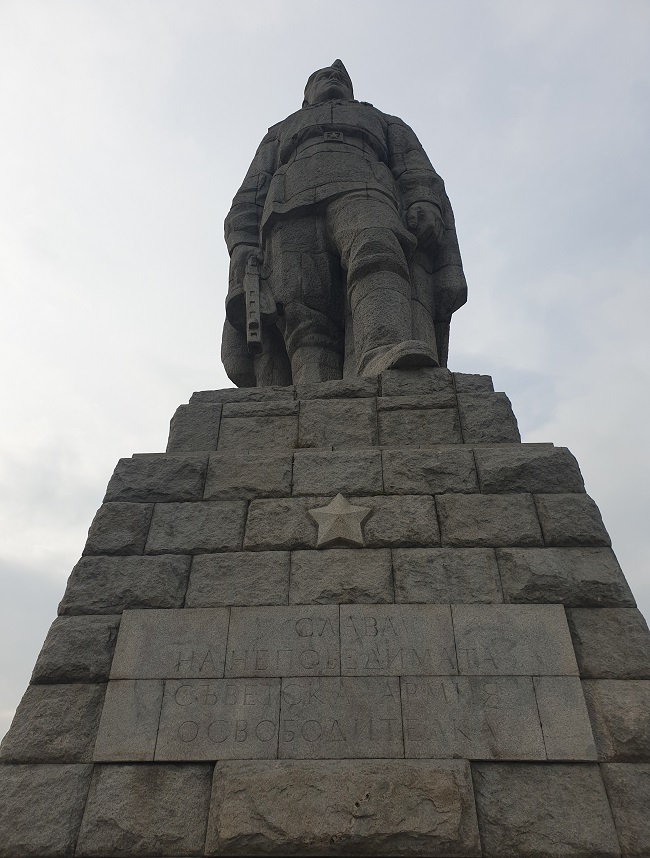
Bunarzhik is the second tallest of the hills and is topped by an impressive 11 metre tall concrete Soviet soldier known as Alyosha, a memorial to the Bulgarian Soviet casualties of World War II. Getting to the top is a more challenging walk than Nebet Tepe, and the views are arguably even better. When I went it was totally deserted, which made it a bit eerie but even more special. Apparently, there’s also a tree there planted by Yuri Gagarin. If that kind of thing floats your boat.
Old Town
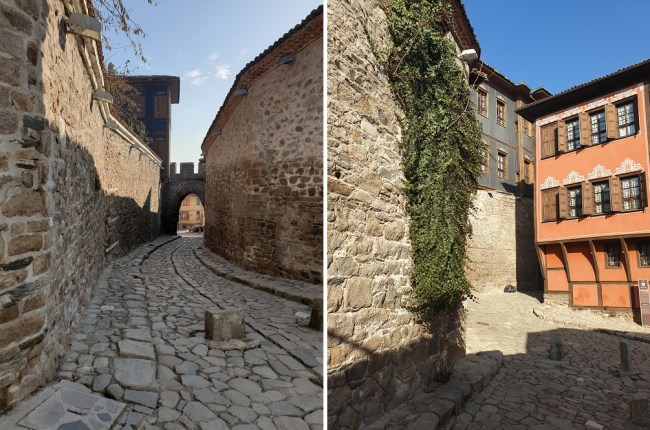
Plovdiv’s Old Town is an architectural and historical reserve and you could easily spend half a day wandering down its cobbled alleys and into its sheltered courtyards (even longer if you pop into some of the many museums). It’s a feast for the eyes with lots of stunning wooden and painted houses, churches and Roman ruins.
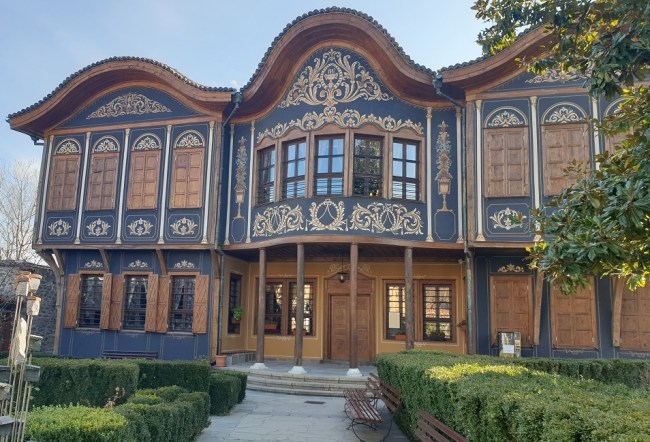
I was particularly taken with the façade of the Ethnographic Museum, which also has a beautiful garden you can sit in to soak up the atmosphere, read a book or simply rest your legs.
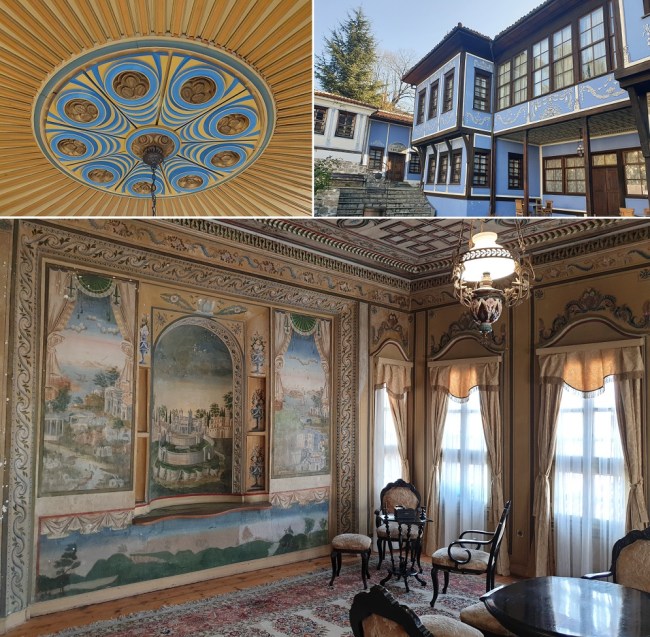
You can also visit a number of Revival Houses in the Old Town – highly decorated mansions built by wealthy merchants during Bulgaria’s Revival Period (around 1770 to 1900). They’re stunning both outside and in, though I restricted myself to entering only one, the Hindliyan House.
Another must-see is the Ancient Theatre, a Roman amphitheatre built into a hillside that offers beautiful views across the city. It’s only open during the daytime (5 lev), but it’s also worth visiting at night to see it lit up against the backdrop of urban Plovdiv. Be careful when walking around if you do enter – there are some very worn and steep steps, with not a handrail in sight!
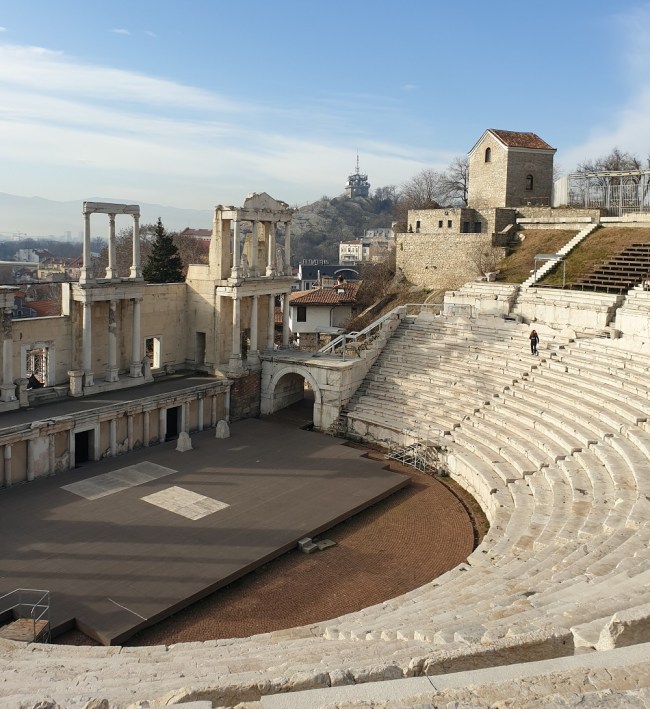
In the warmer months, the amphitheatre is actively used as a music and theatre venue, so be sure to check the listings before you go.
Eating and drinking
The absolute culinary highlight of my trip was an Airbnb experience (my first ever), cooking traditional Bulgarian dishes with Dobromir. He guided me through four dishes:
- Banitsa, filo pastry filled with cheese and egg, traditionally eaten for breakfast;
- Shopska salad, a colourful and refreshing mix of vegetables and cheese;
- Baked tomatoes, eggs and cheese with a spicy pepper; and
- Yoghurt and green fig dessert.
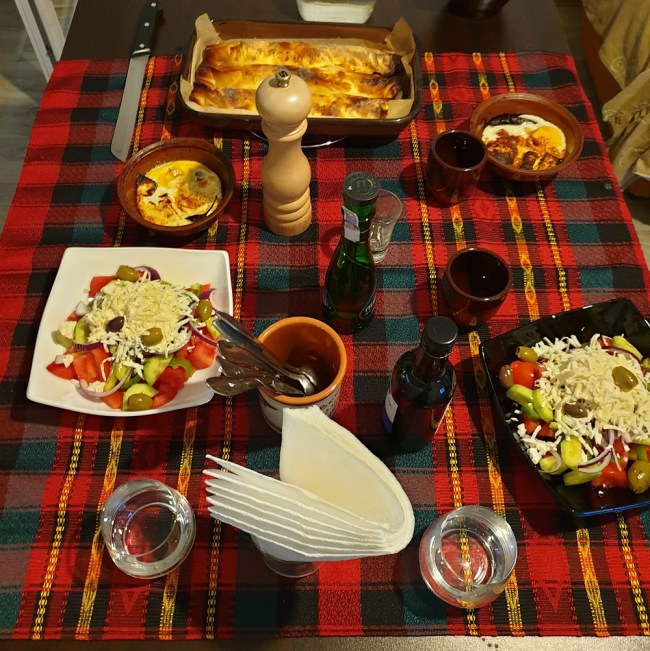
It was all delicious, and complimented by good company and a whirlwind tour of Bulgarian culture. Dobromir also added some special touches – like goodies to take away and a taste of Bulgarian wine and rakia – that really made the evening.
Other food and drink establishments that I would recommend are:
- Cat and Mouse Bar: a craft beer bar and workspace in Kapana that is a great place to while away the hours sipping a drink and people-watching.
- Satori Magic Café: a cute and cosy café on a corner in the Old Town.
- Djumaia Turkish Coffee, Tea & Sweet House: a small Turkish café attached to the Dzhumaya Mosque that serves hot drinks and deliciously sweet treats.
Street art
I’m a sucker for striking and unusual street art, and there were lots of good examples to enjoy in Plovdiv. Forming a nice contrast to the historic architecture, I couldn’t help taking a few snaps – some of my favourites below.
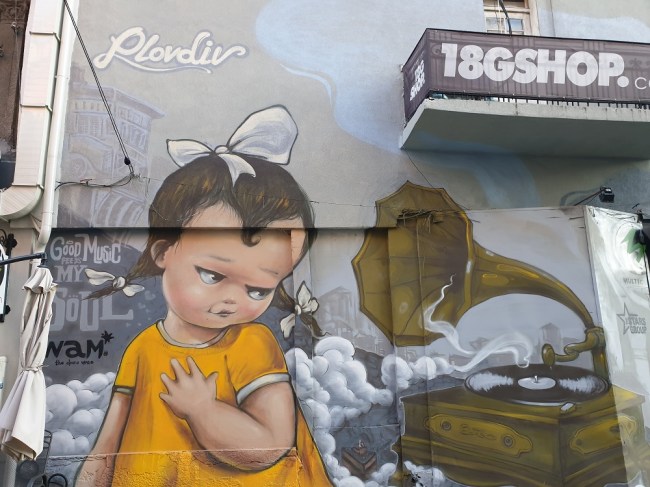
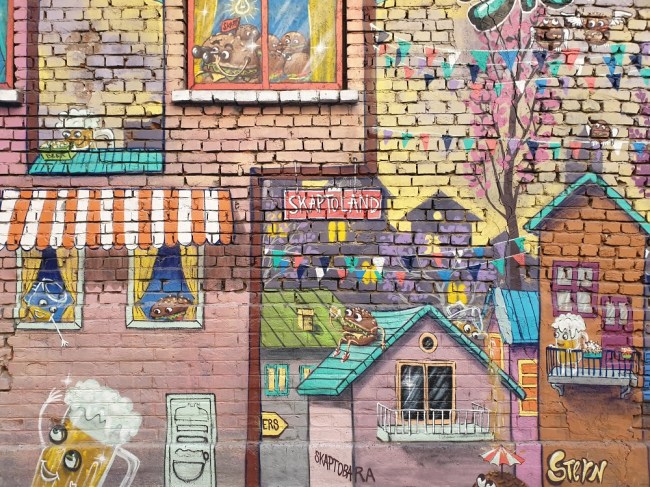
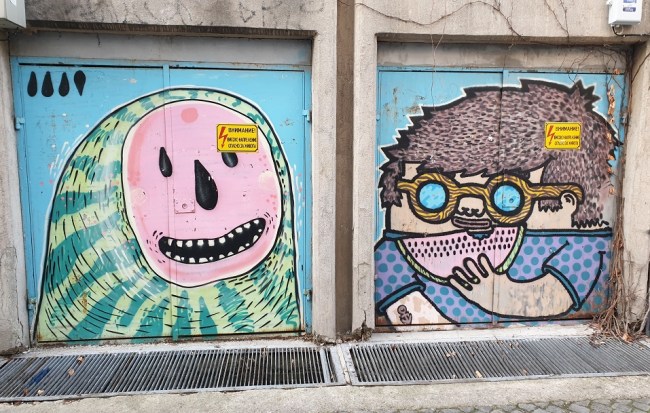
It was bittersweet heading back to the UK a couple of days before Brexit became official. But I’m undeterred from ticking the last EU country off my list – see you soon, Cyprus!
 All Around EU