Official languages: Dutch, French and German
Capital: Brussels
Currency: Euro
Population as % of total EU: 2.22
Joined EU: 1958
Did you know?
- Belgium holds the record for the longest period a developed country has been without an elected government (589 days). Another infamous event involving the Belgian government took place in 1990, when it dethroned the king for 36 hours (at his request) to pass a pro-abortion law that he didn’t want to sign.
- The common side of all Euro coins was designed by a Belgian, Luc Luycx, following a European Union competition. If you look closely at the numerical side of Euro coins, you should be able to spot two tiny ‘L’s on them – his initials.
- Belgium is home to the longest tramline in the world. It’s 68 km (42 miles) long and runs along the Belgian coastline between De Panne on the French border and Knokke-Heist on the Dutch one.
- In 2007, Belgian soldiers were deployed to fight a plague of hairy caterpillars.
- More international organisations are located in Brussels than in Washington DC, and there are about 120 international government organisations, 181 embassies, over 5,000 diplomats and more than 1,000 lobby groups based in the city.
Visiting Belgium: a flying visit to Brussels
I’ve been to Belgium quite a few times over the years – though only to Bruges and Brussels – but haven’t been able to recall many details from any of those trips.
So, when planning a trip to Luxembourg earlier this year, I decided to travel via Brussels and spend a night with a friend who lives there. The stopover was short (a little over 24 hours) but sweet – and enough to pull together a few tips for anyone who might find themselves in town.
EU geekery
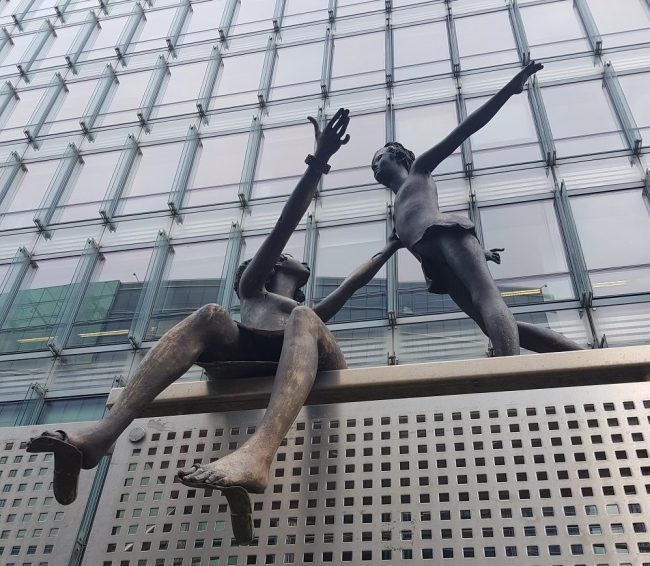
Whether you love or hate the EU, Brussels is a great place to learn more about it – what it is, how it works, why it came about and what it represents. Your first point of call for this should be the wittily named Parlamentarium.
As the name suggests, the museum is all about the European Parliament – but it also gives a great flavour of the diversity across and the commonalities between the countries that make up the Union. There’s a lot of information to digest and it all needs to be navigated using an interactive multimedia guide, which is a bit overwhelming and often glitchy.
To mitigate this, my museum tip would be to focus your time on two exhibits. Firstly, the photo wall (about halfway through), a timeline of images submitted by EU (and some non-EU) countries, picking out what they feel are key moments from their modern-day histories. The second is at the very end of the museum path – a room full of comfy chairs where you can watch videos of normal people from across the EU, whose lives have been significantly impacted by being part of it.
If you love the EU, the gift shop is also a must – badges, t-shirts, bags, puzzles and all kinds of twee souvenirs.
Around the corner from the Parlamentarium is the European Parliament Hemicycle, which can seat all 751 Members of the European Parliament and is used for some of their most important debates and votes. You can visit it with an audio guide – it only lasts about ten minutes, but is definitely worth a stop.
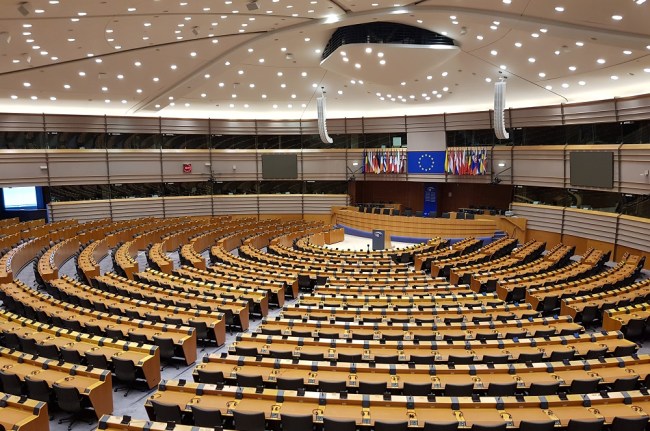
Both the hemicycle and the Parlamentarium are free.
Consumable delights
Belgium has a few specialities that are sure to tickle your taste buds. To name but a few: waffles, chocolate, beer and chips. You can find excellent places for all of these across the city, but here are a few tried and tested recommendations:
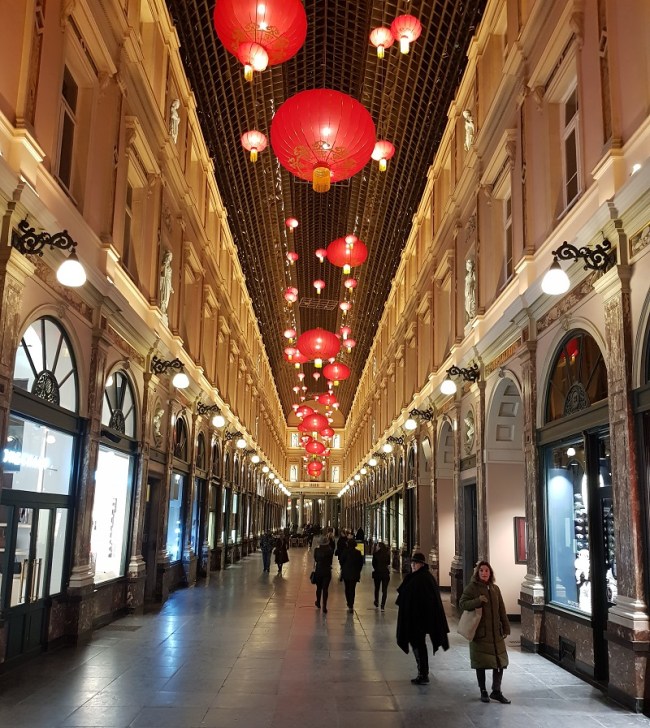
- The numerous chocolate shops in the beautiful Galeries Royales Saint-Hubert. Even if you don’t buy, many shops have tasters and the window displays are amazing.
- The Maison Antoine stall in Place Jourdan for chips. Various bars and cafes around the square have an agreement in place that allows you to eat the chips on their premises (these are clearly signposted) – I’d recommend washing them down with a cold beer. Beware: the portions are massive, even the ‘small’.
- Sample a wide range of Belgian’s finest beers at Poechenellekelder (for many creepy puppets and an old school feel), Café Delirium (more than 1,700 beers) and Cantillon (a brewery and museum that only serves lambics).

It doesn’t fit into any of the categories above, but I’d also like to give a shout out to Piola Libri, an Italian bookshop, café and bar. The literature is obviously restricted to those who speak Italian but the food is delicious, and the atmosphere lovely. Booking recommended.
Mannekin Pis
One of Brussels’ strangest – and most popular – tourist attractions is the Mannekin Pis, a small fountain of a young boy urinating. It’s quirky for sure, but surprisingly small and really quite underwhelming. Despite this, it seems somehow poetic and a trip to Brussels isn’t really complete until you’ve at least had a glance at it (extra incentive: Poechenellekelder is literally around the corner).
Every so often, the little fountain gets dressed up for special occasions, and you can even visit his wardrobe.
Wandering around parks and squares
If the weather is clement, walking around some of Brussels’ neighbourhoods and parks is a good way to spend a morning. Consider Etterbeek, Parc du Cinquantenaire (home to many museums and the Triumphal Arch) and Parc Léopold, and make sure to cross through the Grand Place.

And then, after packing all this into a day, we hopped onto a train to Luxembourg…
 All Around EU